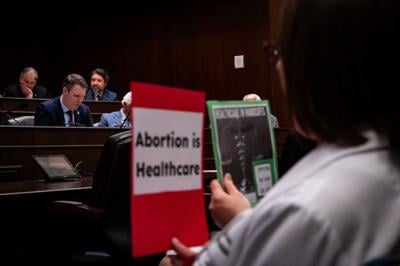
In Tennessee, a pregnant person cannot get an abortion except in cases of an ectopic pregnancy or a molar pregnancy, or if the mother’s life is in danger. This year, several legislators sought to broaden those exceptions — to no avail.
Perhaps most notable among those attempts (or planned attempts, anyway) were public declarations from physician Sen. Richard Briggs (R-Knoxville) about his intention to bring a bill allowing abortions in cases of fatal fetal anomalies — pregnancies in which the fetus would not be able to live outside of the womb. (Her own experience with a fatal fetal anomaly prompted Allie Phillips to declare her candidacy as a Democrat for House District 75.) Briggs never filed the legislation. Democratic lawmakers sought to allow for exceptions in cases of rape and incest, and for those under age 13 (Tennessee’s age of consent is 18), but those were shot down.
The abortion-related bill that did make it to the finish line was an “abortion trafficking” bill from Rep. Jason Zachary (R-Knoxville) and Sen. Paul Rose (R-Tipton). Under the new law, any adult who takes a minor out of state to receive an abortion without parental permission could be faced with a felony charge. The vague terminology criminalizing anyone who “recruits, harbors or transports” a minor is something lawmakers tried but failed to straighten out. A similar law in Idaho is under a federal block after advocacy groups argued that it violates the First Amendment (a doctor’s right to discuss abortion with minors) and the Fourth Amendment (a person’s right to travel freely between states).